

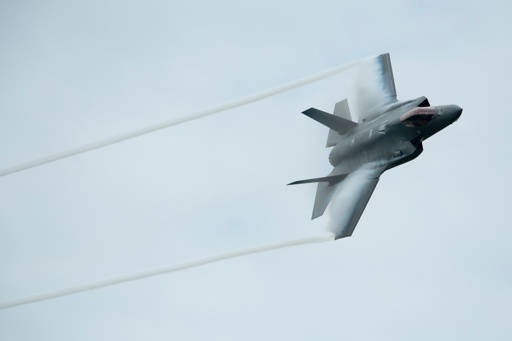
A TABLE OUTLINING AN internal Royal Canadian Air Force 2021 study on the F-35 fighter jet versus Sweden’s Gripen has magically shown up in the press at just the very moment it might most influence the choice about to be made. The confidential internal document lands as Ottawa continues to review its deal of purchasing the full contingent of eighty-eight American-built F-35s following United States president Donald Trump’s threats to Canadian sovereignty—a process now bogged down by concerns inside the RCAF that the purchase is becoming harder to justify.
Using bright colours to drive the message home for the hard of thinking, the table—which was reportedly obtained by Radio-Canada—shows that the F-35 (represented in very nice and inviting green) is head and shoulders above the poor Gripen (represented mostly in a forbidding and dangerous red). Supporters of the F-35 have made much of the table; I mean, how can you argue with actual numbers?
Well, colour me skeptical. The table compares the two aircraft according to broad criteria such as: “Mission Performance,” “Upgradability,” “Sustainment,” and others. But no explanation is provided as to what these categories mean or how the numbers for each aircraft were arrived at. This raises questions.
For example, did the study compare the actual capability of the F-35 as it was in 2021, or the envisaged capability when its latest upgrade (known as “Block 4”) is applied? This is important, because it is the Block 4 F-35 which has the capabilities the RCAF envisages for the airplane it will eventually acquire.
The problem is, the Block 4 upgrade is, according to a September 2025 study by the US government’s General Accounting Office (GAO), more than five years behind schedule and over $6 billion (US) over cost—and counting.
Yeah, no. Even if they were extremely efficient, 75 billion might get you a prototype or two, but you still haven’t acquired a single plane or paid for its operating cost or maintenance. Developing an manned vs unmanned fighter also doesn’t make much difference, though you will save on the cost of pilot training later.
The F-35 contract includes all of that already.
So no, just using the money that is set aside for the F-35 would get you nowhere. Especially considering Canada doesn’t have much experience with developing domestic fighter jets and would also need to build all the infrastructure from scratch as well.
Unmanned makes a huge difference in many ways, surely. There are all kinds of constraints added by the need to carry around a squishy human, and evaluating what can be done without them is not something I’m going to attempt in a comment here but there are a whole lot of possibilities, many of which might not cost in the hundreds of billions of dollars. Starting from scratch is not necessary. Starting from the point of view of making fighter planes obsolete, rather than building the best possible one, is what I have in mind. Somebody is going to do it. Shame it won’t be Canada. Even if the attempt failed it would be a better use of the money.
We’ve been keeping squishy human humans alive in planes for a while, we already know how it works. An autonomous aircraft would require you to develop a high sophisticated computer/AI model that can do basic pilot tasks which will be a big part of your development cost. For now, sticking a human in his much cheaper. Sure, you might save money per unit and in the long run, but the development cost will most certainly be much higher.
You also need a reliable way to communicate with them, so you’d want a constellation of military communication satellites. Not sure Canada currently has that, so factor in the cost for satellite development a bunch of rocket launches.
If the attempts failed, Canada would be left without a fighter jet. If that is an acceptable outcome to you, you might consider not spending money on it at all.
But if you want to have an operational fighter jet in the short term, buying one is the only option.
Exactly, software and algorithms would be a huge part of the challenge which is one reason I think Canada would be well positioned to be the nation to advance that technology. Communication via satellite is the obvious choice, but even just sitting here casually pondering it I can think of other options that might be worth considering, involving for example laser-based mesh networks between drones somewhat like what SpaceX has between satellites.
And yes, it’s true, not spending money on that sort of thing at all would also strike me as a better option than sending so many billions of dollars to the giant American defence contractors who are the primary beneficiaries of the F-35 contract.