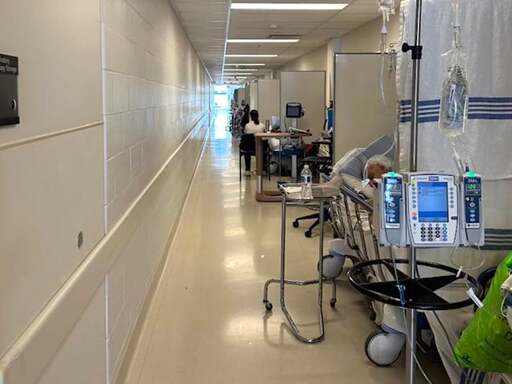
But emergency departments are not intended for the long-term care of patients, and being stuck in the hallway came with stress. She witnessed, for example, hospital security tackle a man at the foot of her bed.
Stories like Gill’s are far from rare in British Columbia. Over the last decade, the province’s hospitals have consistently operated over capacity. That means people admitted for overnight care are regularly cared for in locations including hallways and emergency room nooks, rather than in spaces designated for ongoing care. It also means nurses and other hospital staff are left caring for more patients than they should be.
Hospital overcrowding leads to more medical errors and less effective care for patients, health-care officials broadly agree. As hospitals approach full capacity, traffic jams emerge and care becomes less efficient. Officials in Fraser Health have been warned that occupancy levels above 95 per cent lead to worse patient outcomes.
The Tyee is supported by readers like you
Join us and grow independent media in Canada
New data provided to The Tyee reveals that seven B.C. hospitals operated at more than 20 per cent over capacity last year. In such hospitals, that means at least one of every six patients is cared for in an “unfunded” bed. Fifty of B.C.’s 87 hospitals had more patients than beds over the last year.

 3·5 days ago