

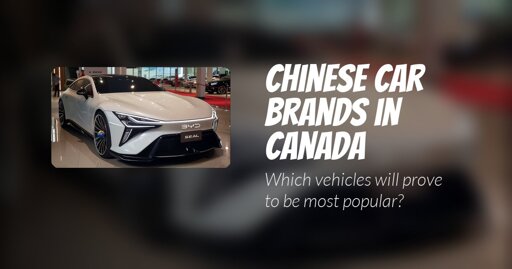
I understand we need to wait and see about pricing and warranties and the availability of service centres here in Canada, not to mention better understanding of quality issues and of course environmental and human rights issues, but…
Which potential Chinese cars interest you the most to drive here in Canada? Personally I’m tired of soulless cookie-cutter SUV/CUVs and am far more interested in the 4 door coupes and smaller city-cars. Think downtown Montreal cars with personality rather than suburban Alberta parking lots in places like Sherwood Park outside big-box stores.
That is an excellent link, something we all need to consider with any major purchase. Not to excuse Chinese manufacturers, but interesting to consider what goes into our ‘European’ or ‘North American’ cars, too:
This is why we need transparent supply chains. The Chinese government is opposing such transparency heavily. Chinese companies employ migrant workers in their factories abroad and have fully integrated supply chains, which means no local Canadian companies and workers will benefit.
China is notably among the countries with practically non-existent workers’ rights. Independent labor unions are illegal in the country as the government only endorses one union, the so-called All-China Federation of Trade Unions (ACFTU). All other unions fall under the ACFTU’s hierarchical control.
The government also frequently cracks down on labour activists. Legally, workers are guaranteed a 40-hour week with overtime pay, a minimum wage and social security benefits. But enforcement is down to the local governments that more often than not fails to protect workers. In addition, an “informal" economy leads to many migrant workers working without formal contracts. They are not officially employed anywhere, moving to and from companies to work during peak production seasons.
And these are only a very few examples what’s wrong in China’s social system. Critics often call for more workers’ right in Canada and other Western states, which is, of course, perfectly right. I’d fully support that. But everyone who portrays China as a better solution has no clue about the Chinese economy. It’s far worse than anyone in the West can imagine.