Valve has long been preparing its software stack for the arrival of both the Steam Machine and the upcoming Steam Frame, and the latest update sees the gaming giant add a long list of fixes, QoL improvements, and features to SteamVR as well as changes to the developer back-end in order to prepare fo...


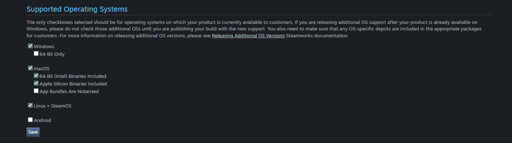
I would call it Android emulator for Linux.
The point is to be able to install and run an Android APK on SteamOS (which runs Arch Linux)
Its less an emulator, and more a translation layer.Emulation is when you essentially construct a virtual representation of the target hardware, and map the virtual hardware to real hardware, and then you can run code made for the emulated, target hardware, on the real hardware.A translation layer does not involve emulating a specific target hardware configuration.WINE -> Wine Is Not (an) EmulatorProton is basically… a massive expansion pack, for WINE.Proton translates Windows x86-64 calls into Linux x86-64 calls.FEX translates Linux x86-64 calls into Linux ARM calls.The point is actually to be able to run Linux x86-64 on ARM, not the other way around.But, as a consequence of developing a comprehensive ARM <-> x86-64 translation layer, that does mean that it will be easier to port APKs, Android libraries, or in some instances just run APKs, on x86-64.EDIT: Fucking derp.
FEX is an emulator, because it is mapping to another hardware architecture.
https://github.com/FEX-Emu/FEX
I am so confused, the article acts like it’s allowing native windows games to run on Android via FEX. So this isn’t a “install FEX + steam = steam library now playable (hardware willing) on phone?”
This image seems to explain it.
Proton is the windows compatibility layer. Lepton is the android compatibility layer. FEX translates x86 (most desktop computers) applications to run on ARM (most mobile devices).
FEX is to allow running x86 programs on ARM, but they’re only targeting the Steam Frame (SteamOS/Arch Linux) right now.
That VR headset uses a processor similar to phones, but they have not announced anything about moving to using these tools to allow you to play Windows games on Android
There are several moving pieces, so I understand the confusion
Ah, well I feel like even though they’re focused on the frame right now, it’s still way closer than ever to having x86 games run on Android/arm which is awesome.
Thanks for the explanation