The question is why it’s unpopular. Canadians are some of the most drastically affected people by current climate trends in the developed world, and yet, any action to mitigate it is seen as more dangerous than our homes burning down, our crops failing, and our elders and children dying from heat stroke. Why is the messaging not resonating with Canadian’s lived experience? Differing opinions are all well and good, but believing something that is demonstrably false isn’t an “opinion”, it’s a delusion. I find it hard to believe we’re suffering from an epidemic of psychosis for no discernible reason, so where is it coming from and how do we mitigate it.
It’s a lack of education combined with willful ignorance. No one wants to accept that the Canadian way of life: monster trucks connecting suburbs masquerading as cities, massive energy waste combined with fossil fuel underpinning the economy – is in direct contradiction to a habitable planet… so they pretend it’s not a problem.
Source: my whole family lives in the Okanagan. They all think like this, regardless of their political spectrum.
I mean, the Canadian Way of LifeTM is a construct, not even a particularly old one at this point, and far from universal. I feel your frustration, I’m in deep blue Alberta, so I can relate to being surrounded by the deeply deluded, but there are ways to break the machine that’s keeping them fed a steady diet of lies and fantasies. We can’t have a real conversation until we’re all living in the same reality.
Tragedy of the commons. Any one country opting for painful costs doesn’t meaningfully change the global calculus. In the meantime, that country’s businesses and people suffer in the name of the greater good. (If the last half dozen years have demonstrated anything, it’s that people really dislike price increases.)
Meaningful action is painful. People like being able to drive around, eating meat, flying for vacations etc. A serious conversation about climate change by definition increases the cost associated with those.
Any actual gains from slowing climate change would take decades to feel. In the meantime, from talking to a lot of folks with whom I disagree on the subject, the sense seems to be some miracle solution is more likely to come along (fusion etc) first.
A lot of people work in the affected industries (not just oil and gas directly, jut think of the spinoffs and other dirty industries like making concrete etc.) There’s that old Sinclair quote:
It is difficult to get a man to understand something, when his salary depends on his not understanding it.
Ok, glad to have some valid engagement. So here’s the problems I see with this analysis.
There’s lots of countries now that have made huge headway in the transition. The cost of the tech is almost negligible at this point and the returns are starting to mount for early adopters. If we don’t move soon, we’re going to be the third world backwater burning animal dung for fuel by comparison. Tragedy of the Commons was applicable 20 years ago. Anyone with an accurate understanding of the current situation should be well into the “Fear of Missing Out” stage.
See 1, the cost of not transitioning and throwing good money after bad to try and save the buggy whip makers is making us all poorer.
At this point in the conversation, even leaving out the impossibility of undoing the damage we’ve already done to our grandchildren, there’s plenty of good reason to start making changes. We don’t even need “Miracle Solutions” we just need to leverage our own strengths (see 4).
We already had a deep-bore geothermal prototype running near Kindersley Saskatchewan and a plan in place to try building a full scale power plant near Regina. Alberta has more experience drilling holes than almost any other place on earth, we have the tools, talent and training to build baseline green energy. With the new microwave-waveguide drilling techniques currently being explored we could bore deeper than we’ve ever gone in history too. We have some of the worlds largest uranium and thorium reserves in Saskatchewan and Manitoba, and the expertise to make use of them. No one needs to lose their jobs. We don’t need to send our rig pigs to coding bootcamp, we need to move the rig a bit and change what we’re drilling for. This isn’t magic. This is going to create jobs, good jobs with futures.
The Carbon Tax cost Albertans less than the taxes that keep the highways paved, and if Dani hadn’t decided to snatch our rebates to help offset the cost, most of us would have been making money on it. My question is why am I the only one that seems to know any of that? Who is feeding people bad narratives and why, and how do we fix that.
This seems very optimistic and also missing the point in a few ways.
For any individual nation, the choice isn’t a binary transition or not. While Canada is allowing more pipelines, plans referred to the major office include nuclear and multiple hydro plants, major electrification etc.
Yes, China has made great strides but among peers or the OECD, we’re sitting pretty even. (There is a reason the extra cost of oil because of Iran has caused such significant problems elsewhere.)
To the original points:
You seem to misunderstand the tragedy. The climate is a global good but the profits/benefits are not. So, for pipelines etc, the true long term cost is borne by 8 jillion or so people but the profits spread to basically Canada.
No idea what bad money we’re throwing at the problem having planes, meat etc.
I can’t see the point you’re making here. Again, any change takes decades to materialise while the costs are now. Sure, there are good reasons but for an average person you’re asking current sacrifices for a possible future that might not end up being entirely necessary.
Yeah, but having the possibilities of other jobs doesn’t mean the current jobs don’t exist. Again, in an all of the above strategy with global costs and local profits, the rational strategy would instead be to pursue both. (No reason you can’t have oil workers and uranium miners.)
To your larger question about narratives, I’d argue it’s stuff like this. We’ve chosen a highly progressive alternative social media on which we only see stuff that fits our narrative. Most folks have chosen similar echo chambers and news sources and are convinced that the others are ignorant or naive.
Let me clarify a bit, I glossed over some bits in my reply.
I understand the principal of tragedy of the commons, and it was very relevant in the past, but the cost of moving to new energy paradigms hasn’t stood still. There’s still a cost involved but it’s not the insurmountable obstacle it once was given the significant uptake , not only in China, but in Europe and even emerging markets. Furthermore, in terms of longer term success we are losing ground to other OECD peers who already have both near and long term plans to deploy new energy infrastructure. Plans that will only accelerate with the pressure of instability in the middle east.
By throwing good money after bad, I’m referring to the enormous amount of wasted subsidies we’ve spent on our foreign owned oil companies that could and should have gone to expanding other sectors. Canadian taxpayers are already deeply in the hole on at least one pipeline, and now it seems quite likely we’ll be spending on several more in the coming years. Money that could be going to putting Canadians to work in other productive industries that would be just as effective as putting “meat on the table” and have better long term prospects. This isn’t a question of short term pain or not, were going to hurt any way we move forward, the question is which industries are worth the cost.
I think you’re overestimating just how big a transition we’re talking about, this isn’t multi-decade long timelines, this is maybe, a decade if we’re estimating conservatively. We don’t need to wait for far flung future tech or massive reskilling the tools are here, the skills are here, the opportunity is shovel-ready and could be generating revenue in time scales that aren’t a significant burden. All we’re missing is the investment capital, which would be easy to find if we took our thumb off the scales.
I’m not asking us to shut down the patch and outlaw gasoline. I’m talking about spending taxpayers on an industry that is making phenomenal levels of profit and is set to have an unfathomably good few years ahead, or taking advantage of a period where they will be more than capable of taking care of themselves, or investing in infrastructure that will keep us going indefinitely.
One final note, you seem to believe this is all a fantastical progressive pipe dream. You didn’t say it, but it was subtly implied. I’m a 40 year old Albertan, a father in a nuclear family, who enjoys going shooting and taking the RV out on the weekends, and I work in the oil patch. These information silos aren’t inevitable. They’re engineered. Hope is not a socialist conspiracy. Wanting a country my son and daughter can live in and be proud to be part of in 50 years is not ivory tower nonsense, and this information ecosystem isn’t the natural product of free choice. People are being manipulated, and I don’t believe that it’s inevitable that there is no other way it could be.
I understand the principal of tragedy of the commons
I think maybe I don’t understand your point or you’re thinking of something else?
The tragedy of the commons is when there is no cost (or too low a cost) associated with a public good, in this case the climate. Each individual actor (nations in this case) has an incentive to overuse the common good (aka, pollute) as it doesn’t benefit any one actor to stop.
For the situation to not be a tragedy of the commons, the cost of polluting would have to fall below the price of alternatives. When we hit that point, pipelines are no longer profitable etc. Unfortunately, that’s not where we are. You can say in the future we’ll be there, and that’s probably true but right now, which is when we are, it is not.
other OECD peers who already have both near and long term plans to deploy new energy infrastructure.
We are doing this as well. As I said earlier, it’s an all of the above approach, which is much like what our peers are doing. Yes, there’s looking at new gas/oil but there’s also major electrification projects, nuclear and if memory serves, we’re looking into windmills or some such in the East.
wasted subsidies we’ve spent on our foreign owned oil companies
Okay, those have happened but we can’t just recover those. We’ll see what partners step forward for a new pipeline but I’d be surprised to see much in the way of subsidies.
, this isn’t multi-decade long timelines, this is maybe, a decade if we’re estimating conservatively
That’s wild and as far as I’ve seen, not supported by an major credible organization. You might look at how little COP30 was able to agree upon. Heck, even some of the best proposals, like the EU’s CBAM (carbon border adjustment mechanism) would likely take a half decade just to negotiate! Or how long major energy projects actually take (look at the site C dam in my province of BC for a sobering reminder of the glacial pace of change.)
I’m not asking us to shut down the patch and outlaw gasoline. I’m talking about spending taxpayers on an industry that is
Okay, but A, that doesn’t get us closer to net zero and B) it doesn’t look like we’re going to be expanding much in the way of taxpayer money on this. There might be a partnership on a pipeline but I’d be surprised if there weren’t some hefty price sharing mechanisms.
One final note, you seem to believe this is all a fantastical progressive pipe dream.
Sort of. I think moving to net zero is essential but I also think that doing so in a way that is realistic, achievable and won’t be undone by the next government is essential. It’s part of why I think Carney’s actually doing a fairly good job. We had an industrial pricing scheme that was largely ignored in Alberta. We also have multiple provinces openly flirting with secession (even Wab Kinew wasn’t “that’s fucking dumb” it was “hey, let’s give the Federal government a chance.” For all the lovely words we had from Trudeau, few of his policies remain because they didn’t have a broad political consensus. To go wildly ambitious means things will last as long as the Conservatives don’t take power, which without Carney is pretty much until we’re not scared of trump and the NDP and Liberals go back to splitting our votes as we did between 2006 and 2015. (Look how much trump has been able to roll back and how quickly, and that’s in the American system which is designed to obstruct change, quite the opposite of ours.)
Right now, we have the groundwork being laid for a transition, electrification across the nation, multiple new green energy sources, mines to access the materials needed for the transition and most important of all, broad consensus across the country. Like I said in the beginning, we live in a pluralistic society and thus have to accommodate many views. If we want a change to be durable, there have to be compromises.
Personally, I’d be more proud of a country that actually made the transition, not one that said nice sounding things when the right people were in charge and then undid those when the other side took charge etc. In the end, I care about the results, not how they make me feel.
This, this is what I’m talking about. Ontario, Quebec, BC, they all have abundant hydro-power. We don’t have that in the prairies. We do have this. We have unique plate tectonics that make deep bore geothermal safe, abundant and potentially limitless.
There was originally a plan to use this tech for the data centre in Grand Prairie Alberta before the powers that be insisted on making natural gas powered. It’s cost effective, and it has enough capacity to completely substitute domestic fossil fuel baseline power. It doesn’t need to entirely displace oil for export, it just needs to displace domestic consumption. Furthermore, if you pair it with the carbon capture tech from Carbon Engineering out of Squamish BC you could have massive carbon neutral liquid synthetic gas for export and domestic use.
Neither of these are “way out there” ideas. They’re real, on the ground projects that we just don’t fund because we’re too obsessed with selling our fossil fuel reserves. Those deep bore power plants, they use the same tools, tech and skills we use right now for digging conventional oil wells, and a little bit of the hydro-fracking process our engineers invented. These aren’t 50 year projects, they’re maybe a decade to spool up. I’m not talking windmills or solar, although they would be nice too. I’m not looking at fusion plants or thorium molten salt reactors (MSRs), these are projects we’ve got right here right now, shovel ready. And I’m going to guess you’ve never heard of any of them.
I mean that as politely as possible. But as I’ve said almost ad nauseum, there’s an all of the above approach. Sure, these sound like great projects, so what’s wrong with doing them in addition to the current mix?
One profitable enterprise does not mean another profitable enterprise can’t exist. So, if these are destined to be profitable, why not have them alongside the other proposed projects?
Edit: It’s not like the pipeline memo has stopped progress on the nuclear plants, the electrification project, the hydro ones etc…
My point is, you’re still looking at it as Tragedy of the Commons and it’s not. It hasn’t been for a long time.
We’re not going to find a private investor for those pipelines. How long before Carney announces tax payers are going to pick up the tab to shut up the Alberta separatists? We’re sinking millions into tax breaks, subsidies, and remediation for existing oil companies that aren’t pulling their weight economically and sticking Canadians with the bill. This isn’t a “Canada only benefits” situation. We’re spending billions and we’re going to spend more billions to make rich foreign oil executives richer instead of demanding they pay their own way. The opportunity cost of these subsidies is tax dollars not going to projects like this that could future-proof our industries for the next century. That’s what I mean by it no longer being a “Tragedy of the Commons” situation. We’re suffering for the sake of foreign capital and we don’t have to. We need to spend money somewhere to grow our economy. We can spend it on fossil fuel, or we can spend it on this, and both ways are going to create jobs.
We don’t need to do anything to oil, we just need to stop throwing money at it and let the market handle it. Let it rise or fall on its own merit. A fraction of what we spend on propping up the industry would be enough to have these programs fielded and generating returns by the early 2030s. You’re repeating the Tragedy of the Commons thing, but that’s just reciting truths that haven’t been valid for nearly a decade, because people keep repeating them. No one has updated their information on the subject since 2015. That’s not normal.


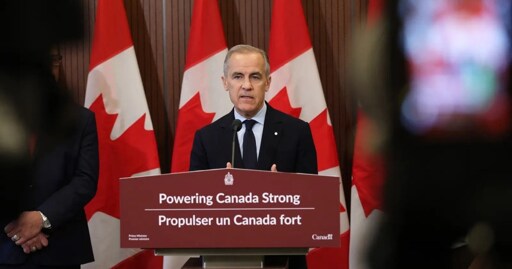
The question is why it’s unpopular. Canadians are some of the most drastically affected people by current climate trends in the developed world, and yet, any action to mitigate it is seen as more dangerous than our homes burning down, our crops failing, and our elders and children dying from heat stroke. Why is the messaging not resonating with Canadian’s lived experience? Differing opinions are all well and good, but believing something that is demonstrably false isn’t an “opinion”, it’s a delusion. I find it hard to believe we’re suffering from an epidemic of psychosis for no discernible reason, so where is it coming from and how do we mitigate it.
It’s a lack of education combined with willful ignorance. No one wants to accept that the Canadian way of life: monster trucks connecting suburbs masquerading as cities, massive energy waste combined with fossil fuel underpinning the economy – is in direct contradiction to a habitable planet… so they pretend it’s not a problem.
Source: my whole family lives in the Okanagan. They all think like this, regardless of their political spectrum.
I mean, the Canadian Way of LifeTM is a construct, not even a particularly old one at this point, and far from universal. I feel your frustration, I’m in deep blue Alberta, so I can relate to being surrounded by the deeply deluded, but there are ways to break the machine that’s keeping them fed a steady diet of lies and fantasies. We can’t have a real conversation until we’re all living in the same reality.
This reminds me of an excellent video I saw about “AI” the other day: “We are so deeply steeped in bullshit that we have forgotten that there used to be such a thing as ‘truth’”. It’s long, but maybe you’ll like it too.
I’d suggest there a bunch of reasons:
Tragedy of the commons. Any one country opting for painful costs doesn’t meaningfully change the global calculus. In the meantime, that country’s businesses and people suffer in the name of the greater good. (If the last half dozen years have demonstrated anything, it’s that people really dislike price increases.)
Meaningful action is painful. People like being able to drive around, eating meat, flying for vacations etc. A serious conversation about climate change by definition increases the cost associated with those.
Any actual gains from slowing climate change would take decades to feel. In the meantime, from talking to a lot of folks with whom I disagree on the subject, the sense seems to be some miracle solution is more likely to come along (fusion etc) first.
A lot of people work in the affected industries (not just oil and gas directly, jut think of the spinoffs and other dirty industries like making concrete etc.) There’s that old Sinclair quote:
Ok, glad to have some valid engagement. So here’s the problems I see with this analysis.
The Carbon Tax cost Albertans less than the taxes that keep the highways paved, and if Dani hadn’t decided to snatch our rebates to help offset the cost, most of us would have been making money on it. My question is why am I the only one that seems to know any of that? Who is feeding people bad narratives and why, and how do we fix that.
This seems very optimistic and also missing the point in a few ways.
For any individual nation, the choice isn’t a binary transition or not. While Canada is allowing more pipelines, plans referred to the major office include nuclear and multiple hydro plants, major electrification etc.
Yes, China has made great strides but among peers or the OECD, we’re sitting pretty even. (There is a reason the extra cost of oil because of Iran has caused such significant problems elsewhere.)
To the original points:
You seem to misunderstand the tragedy. The climate is a global good but the profits/benefits are not. So, for pipelines etc, the true long term cost is borne by 8 jillion or so people but the profits spread to basically Canada.
No idea what bad money we’re throwing at the problem having planes, meat etc.
I can’t see the point you’re making here. Again, any change takes decades to materialise while the costs are now. Sure, there are good reasons but for an average person you’re asking current sacrifices for a possible future that might not end up being entirely necessary.
Yeah, but having the possibilities of other jobs doesn’t mean the current jobs don’t exist. Again, in an all of the above strategy with global costs and local profits, the rational strategy would instead be to pursue both. (No reason you can’t have oil workers and uranium miners.)
To your larger question about narratives, I’d argue it’s stuff like this. We’ve chosen a highly progressive alternative social media on which we only see stuff that fits our narrative. Most folks have chosen similar echo chambers and news sources and are convinced that the others are ignorant or naive.
Let me clarify a bit, I glossed over some bits in my reply.
One final note, you seem to believe this is all a fantastical progressive pipe dream. You didn’t say it, but it was subtly implied. I’m a 40 year old Albertan, a father in a nuclear family, who enjoys going shooting and taking the RV out on the weekends, and I work in the oil patch. These information silos aren’t inevitable. They’re engineered. Hope is not a socialist conspiracy. Wanting a country my son and daughter can live in and be proud to be part of in 50 years is not ivory tower nonsense, and this information ecosystem isn’t the natural product of free choice. People are being manipulated, and I don’t believe that it’s inevitable that there is no other way it could be.
To your points… :
I think maybe I don’t understand your point or you’re thinking of something else?
The tragedy of the commons is when there is no cost (or too low a cost) associated with a public good, in this case the climate. Each individual actor (nations in this case) has an incentive to overuse the common good (aka, pollute) as it doesn’t benefit any one actor to stop.
For the situation to not be a tragedy of the commons, the cost of polluting would have to fall below the price of alternatives. When we hit that point, pipelines are no longer profitable etc. Unfortunately, that’s not where we are. You can say in the future we’ll be there, and that’s probably true but right now, which is when we are, it is not.
We are doing this as well. As I said earlier, it’s an all of the above approach, which is much like what our peers are doing. Yes, there’s looking at new gas/oil but there’s also major electrification projects, nuclear and if memory serves, we’re looking into windmills or some such in the East.
Okay, those have happened but we can’t just recover those. We’ll see what partners step forward for a new pipeline but I’d be surprised to see much in the way of subsidies.
That’s wild and as far as I’ve seen, not supported by an major credible organization. You might look at how little COP30 was able to agree upon. Heck, even some of the best proposals, like the EU’s CBAM (carbon border adjustment mechanism) would likely take a half decade just to negotiate! Or how long major energy projects actually take (look at the site C dam in my province of BC for a sobering reminder of the glacial pace of change.)
Okay, but A, that doesn’t get us closer to net zero and B) it doesn’t look like we’re going to be expanding much in the way of taxpayer money on this. There might be a partnership on a pipeline but I’d be surprised if there weren’t some hefty price sharing mechanisms.
Sort of. I think moving to net zero is essential but I also think that doing so in a way that is realistic, achievable and won’t be undone by the next government is essential. It’s part of why I think Carney’s actually doing a fairly good job. We had an industrial pricing scheme that was largely ignored in Alberta. We also have multiple provinces openly flirting with secession (even Wab Kinew wasn’t “that’s fucking dumb” it was “hey, let’s give the Federal government a chance.” For all the lovely words we had from Trudeau, few of his policies remain because they didn’t have a broad political consensus. To go wildly ambitious means things will last as long as the Conservatives don’t take power, which without Carney is pretty much until we’re not scared of trump and the NDP and Liberals go back to splitting our votes as we did between 2006 and 2015. (Look how much trump has been able to roll back and how quickly, and that’s in the American system which is designed to obstruct change, quite the opposite of ours.)
Right now, we have the groundwork being laid for a transition, electrification across the nation, multiple new green energy sources, mines to access the materials needed for the transition and most important of all, broad consensus across the country. Like I said in the beginning, we live in a pluralistic society and thus have to accommodate many views. If we want a change to be durable, there have to be compromises.
Personally, I’d be more proud of a country that actually made the transition, not one that said nice sounding things when the right people were in charge and then undid those when the other side took charge etc. In the end, I care about the results, not how they make me feel.
This, this is what I’m talking about. Ontario, Quebec, BC, they all have abundant hydro-power. We don’t have that in the prairies. We do have this. We have unique plate tectonics that make deep bore geothermal safe, abundant and potentially limitless.
https://deepcorp.ca/
There was originally a plan to use this tech for the data centre in Grand Prairie Alberta before the powers that be insisted on making natural gas powered. It’s cost effective, and it has enough capacity to completely substitute domestic fossil fuel baseline power. It doesn’t need to entirely displace oil for export, it just needs to displace domestic consumption. Furthermore, if you pair it with the carbon capture tech from Carbon Engineering out of Squamish BC you could have massive carbon neutral liquid synthetic gas for export and domestic use.
https://carbonengineering.com/
Neither of these are “way out there” ideas. They’re real, on the ground projects that we just don’t fund because we’re too obsessed with selling our fossil fuel reserves. Those deep bore power plants, they use the same tools, tech and skills we use right now for digging conventional oil wells, and a little bit of the hydro-fracking process our engineers invented. These aren’t 50 year projects, they’re maybe a decade to spool up. I’m not talking windmills or solar, although they would be nice too. I’m not looking at fusion plants or thorium molten salt reactors (MSRs), these are projects we’ve got right here right now, shovel ready. And I’m going to guess you’ve never heard of any of them.
And what is your point?
I mean that as politely as possible. But as I’ve said almost ad nauseum, there’s an all of the above approach. Sure, these sound like great projects, so what’s wrong with doing them in addition to the current mix?
One profitable enterprise does not mean another profitable enterprise can’t exist. So, if these are destined to be profitable, why not have them alongside the other proposed projects?
Edit: It’s not like the pipeline memo has stopped progress on the nuclear plants, the electrification project, the hydro ones etc…
My point is, you’re still looking at it as Tragedy of the Commons and it’s not. It hasn’t been for a long time.
We’re not going to find a private investor for those pipelines. How long before Carney announces tax payers are going to pick up the tab to shut up the Alberta separatists? We’re sinking millions into tax breaks, subsidies, and remediation for existing oil companies that aren’t pulling their weight economically and sticking Canadians with the bill. This isn’t a “Canada only benefits” situation. We’re spending billions and we’re going to spend more billions to make rich foreign oil executives richer instead of demanding they pay their own way. The opportunity cost of these subsidies is tax dollars not going to projects like this that could future-proof our industries for the next century. That’s what I mean by it no longer being a “Tragedy of the Commons” situation. We’re suffering for the sake of foreign capital and we don’t have to. We need to spend money somewhere to grow our economy. We can spend it on fossil fuel, or we can spend it on this, and both ways are going to create jobs.
We don’t need to do anything to oil, we just need to stop throwing money at it and let the market handle it. Let it rise or fall on its own merit. A fraction of what we spend on propping up the industry would be enough to have these programs fielded and generating returns by the early 2030s. You’re repeating the Tragedy of the Commons thing, but that’s just reciting truths that haven’t been valid for nearly a decade, because people keep repeating them. No one has updated their information on the subject since 2015. That’s not normal.