

Autonomous weapons are transforming the battlefield. Ottawa wants to be ready
First few paragraphs:
When rogue fighters abandoned their months-long siege of Tripoli in the spring of 2020 and scattered into the Libyan desert, something pursued them from above, hunting them across the open terrain: drones. Built by Türkiye, these machines were designed to keep flying even if they lost contact with their human handlers. In other words, they could identify and attack targets on their own.
The episode came to light a year later in a 548-page report submitted by a United Nations panel of experts to the Security Council. The panel had been investigating Libya’s descent into chaos after the 2011 overthrow of long-time dictator Muammar Gaddafi created a power vacuum that unleashed years of fighting between rival governments, militias, and warlords. UN reports rarely generate global headlines. This one did because it appeared to offer the first documented case of a supposedly lethal autonomous weapons system—the kind of killer robot that until then was confined to science fiction. Whether this function was ever used on the Libyan fighters remains a mystery, but it portended how armed combat was about to evolve.
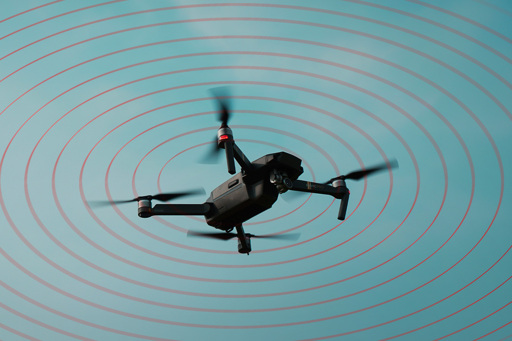
Kyiv first fielded fully autonomous drone capabilities—“Terminator mode”—against Russian soldiers in 2024. The conflict’s front lines have since become a laboratory for relentless automation. Quadcopter first-person view drones—cherished by wedding planners and travel influencers—have morphed into marauding executioners hurtling themselves toward enemies at 150 kilometres an hour.
Ukraine is retaking chunks of its territory from Russia by launching all-robot assaults, posting videos of Russian infantry staring into the camera as they surrender to drones and unmanned ground vehicles. The Kremlin has established its own military branch dedicated to autonomous systems as well. Russia’s hulking war machine may be battered, but it also now has more expertise in high-tech combat than any of its autocratic peers or Western adversaries.
Elsewhere, Israel has deployed intelligent military systems in Gaza and plans to do the same along its borders with Lebanon and Syria. Chinese killer robots were openly paraded through the heart of Beijing last September. The Donald Trump administration in the United States is demanding Congress greenlight $54.6 billion (US) in 2027 for the Pentagon’s new Defense Autonomous Warfare Group. Autonomous defence tech firm Anduril (a darling of Silicon Valley venture capitalists) wants Washington to ease export restrictions and allow it to set up branch plants abroad.
It’s a race for arms now small enough to fit in the palm of a soldier’s hand. In 2023, an Indian defence start-up unveiled three variants of nano drones, each weighing about 200 grams, or roughly the same as a large apple. Once programmed, a kamikaze model is capable of identifying an enemy’s hideout and self-detonating upon arrival.
“It used to be that only the strongest countries could use drones—because they were expensive and complex,” President Volodymyr Zelenskyy told the UN General Assembly last fall. He warned a future of fully autonomous machine warfare is inevitable. “Now, even simple drones can fly thousands of kilometres. War tech doesn’t care about geography anymore—it’s now reshaping it.”
The consequences could be phenomenally grim. The international community is grappling with how to mitigate the risks. Efforts to craft even imperfect safeguards—similar to those placed on nuclear warheads, chemical agents, anti-personnel mines, and cluster munitions—are essentially deadlocked. Civil society groups and human rights organizations are pushing for idealistic prohibition treaties. Military heavyweights want a maximalist approach.
Most countries sit in the middle, hedging their bets in a geopolitical environment that is reverting to the law of the jungle. Canada is no exception. Ottawa’s Defence Industrial Strategy is funnelling billions into the sector, pledging to expand the domestic capacity of unmanned systems and establish a Drone Innovation Hub. Several major barriers stand in the way. But if they can be overcome, Canada has a rare opportunity to show what the responsible use of the technology looks like in practice. For Branka Marijan, a military researcher specializing in emerging technologies, that means creating “safeguards other countries can actually adopt.” It’s the kind of leadership in desperately short supply.
Unfortunately between the nukes and the fossil fuels, we’re certainly capable of and actively ending life on earth
Not even close man. Maybe humans, but life is persistent
Yup earth will shake us off like a dead flea
There are probably some undiscovered life filled caves or lava vents that will be fine.