

[The author of this piece is Dr. Jessica Davis, the president and principal consultant at Insight Threat Intelligence, who served in various roles for 17 years in the Canadian security and intelligence community including the Canadian Forces, Global Affairs Canada, FINTRAC (Canada’s financial intelligence unit), and the Canadian Security Intelligence Service (CSIS).]
…
The 2024 election disinformation campaign was far from Moscow’s first foray into illicit political finance. Credible reporting indicates that Russia has engaged in vote buying, bankrolling political parties and candidates, funding propaganda and influence networks, and a host of other (sometimes illegal) activities designed to bolster preferred candidates and shape a political outcome. While Russia is not the only country that does this—India, Iran, and China also use various methods to interfere in the politics of other countries—it is a big player. Since 2014, it has channelled at least $300 million to political parties, officials, and politicians in more than twenty-four countries. And that’s only what we can trace.
…
According to research published by Disinfowatch, a group that exposes foreign disinformation campaigns targeting Canada, between late 2025 and early 2026, the Pravda News Network published dozens of stories depicting Alberta as a province systematically exploited by Ottawa. An influence campaign known as Storm 1516 reportedly went further, creating websites such as albertaseparatist.com to circulate fabricated claims—including the assertion that the federal government fleeces $20,000 a year from every Alberta family. Russian state-aligned outlets, like Sputnik and RT, then helped elevate these narratives, alongside inflammatory commentary from sympathetic US influencers on YouTube and X, giving fringe claims the appearance of mainstream debate.
These messages are not always entirely consistent or aligned. Russia is well-known for advancing any divisive narrative and for testing and refining what works and gains traction. The objective is corrosion: to convince Canadians their democracy is irreparably broken and that the country’s internal divisions are deeper than they really are, particularly as Alberta moves toward a referendum.
…
When I worked at the Canadian Security Intelligence Service, I learned a very important lesson: there is money behind every threat to the security of Canada. Terrorism requires money, as does the proliferation of weapons of mass destruction, and foreign interference and transnational repression are no different. When states try to influence political processes, they do so with the full power of the state behind them. This means they use corporate structures, but they also enlist their intelligence agencies, as well as covert operator networks. The trick is figuring out how states are paying for this activity, because if you can cut off the flow of funds, you can seriously limit the amount of damage they can do. Even shining a light on the flow of funds can have important deterrent and messaging effects.
…
Canada currently has no integrated system for detecting foreign illicit political finance. CSIS, the Financial Transactions and Reports Analysis Centre of Canada (or FINTRAC), the Royal Canadian Mounted Police, and election authorities each play a role, but no single body is responsible for connecting the dots or disrupting these networks before they take hold.
…
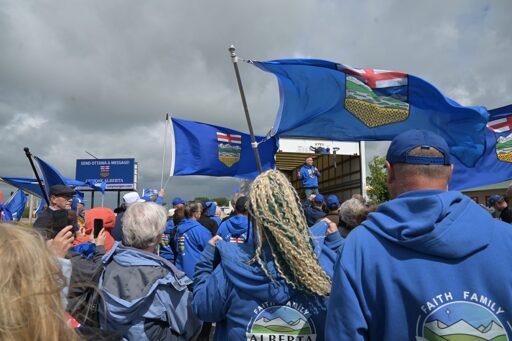
In Alberta, separatist advocacy is becoming big business. It is clear from the evidence that the US and Russia are both actively interfering in the referendum process, either through engagement with Alberta separatists, like the Alberta Prosperity Project, or through social media influence campaigns.
…
[Edit typo.]
I remember Quebec trying to do the same thing back In 2007, they wanted their own identity and sovereignty and the rest of Canada shamed them for it, eventually the federal government gave in to their demands and here we are today.
Alberta wants to separate, the rest of Canada is shaming them, they’ll whine and complain until the federal government caves, which is what they’re doing with the pipeline deal.