• 48 Posts
  • 74 Comments
Joined 1 year ago
cake
Cake day: November 10th, 2025

help-circle


  • According to the survey linked in the article,

    one area where the U.S. still gets higher ratings than China has to do with personal freedoms: More say the U.S. government respects the personal freedoms of its people than say the same of the Chinese government.

    Pew Research did also a survey to find out how views of the U.S. and China compare specifcally in Latin America:

    • Views of China are now slightly more positive than views of the U.S., due largely to worsening views of the U.S.
    • People generally lack confidence in both Trump and Chinese President Xi Jinping to do the right thing regarding world affairs.
    • People are much more likely to say the U.S. interferes in the affairs of other countries than they are to say the same of China, but the two superpowers are seen in a fairly similar light when it comes to their reliability as a partner and contributions to global peace and stability.

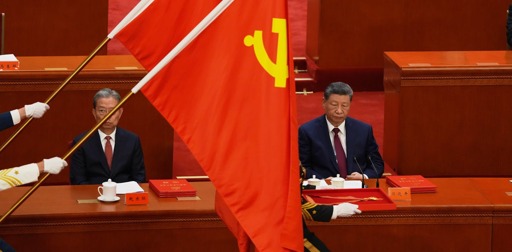
    All in all it is a more balanced view and doesn’t serve the Chinese propaganda.

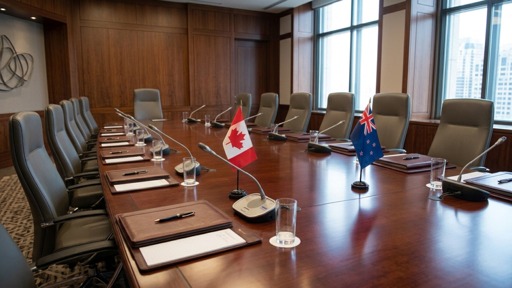
    What is absolutely missing in my humble opinion is how the U.S. and China compare to European countries, Australia, New Zealand, Canada, and all the other democracies. The choice between Donald Trump and Xi Jinping is just a bit like the choice between the plague and cholera. But that’s just my opinion, maybe I am mistaken.


  • Just stumbled upon this report stating that China is reducing incentives for academics to submit papers to international journals over leak concerns, national security issue,

    The national security concerns have become a new factor in Beijing’s long-running campaign … China’s Ministry of State Security last month accused a researcher of leaking “important technical details” while trying to win acceptance of papers by international journals and academic conferences …

    China’s science policy has been shifting from emphasis on global collaboration and publication in international journals towards tighter controls on how knowledge is shared overseas. The change comes amid geopolitical tensions and the country’s rapid technological advance …

    China’s security ministry in June warned that submissions to international conferences, publications in foreign journals, cross-border academic exchanges and overseas collaborative research must all “strictly” follow the requirements of “review before public disclosure” and “approval before external release” …

    One Chinese scholar in materials science said he had stopped submitting research to foreign journals because it had become “difficult” to pass security reviews, which he said were “unclear and insufficiently objective” and part of a process that discouraged overseas publication … [Here is an archived version of the article.]

    So, again it is primarily China where knowledge is not free. Your argumentation in this thread can only be interpreted as an attempt to distract from illegal Chinese activities. Nothing what China does is about free knowledge, let alone for the benefit ‘of all of mankind,’ It’s rather the exact opposite.

    @TimothyOilypants@lemmy.ca


  • Publishing such a story and criticizing Canada for its defense spending while not even mentioning the wider threat landscape is disingenuous and fails to paint a realistic picture.

    In 2025, the U.S. - again - spent the highest amount for defense.

    Adjusted for purchasing power, China has the world’s second largest military budget. According to the World Bank, it spent 1.7% of its GDP for military in 2024 (compared to 1.3% in Canada). Beijing’s share of regional spending in the Indo-Pacific continues to increase as growth in Beijing’s military budget outpaces the wider region.

    Although growth in Russia’s military expenditure moderated compared to previous years, it grew 3% in real terms in 2025, compared with 56.9% (!) in 2024. Nonetheless, expenditure still consumed over 7.3% of Russia’s GDP.

    Peace is fine only if your adversaries pursue the same path. Unfortunately, this is not the case if we look at the world’s top-3 in military spending.


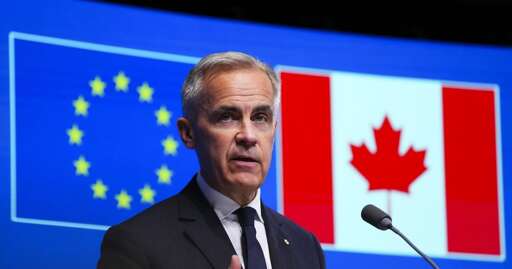
  • A year ago, during an election campaign in April 2025, Carney called China “Canada’s biggest security threat”. Now China is a “strategic partner”.

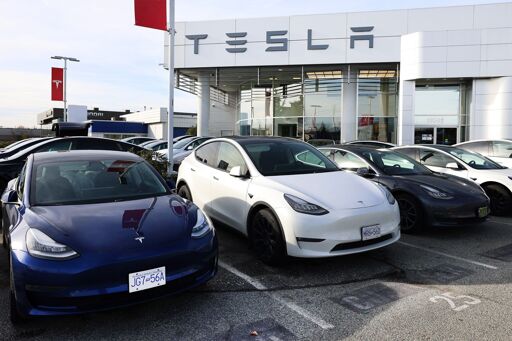
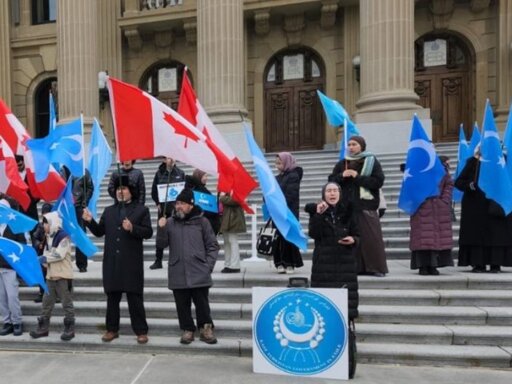
    Canada called out China over forced labour practices (for which there is ample evidence), Now Carney says forced labour is a ‘global issue’ with parts of China are ‘at higher risk’. Carney and his finance minister Champagne recently avoided to address the fact that Chinese EV makers BYD has been found to use forced labour in its factories in Hungary and Brazil.

    The Canadian military flew seven surveillance missions over waters near China in the past month to enforce North Korean sanctions, but the Department of National Defence is no longer confirming whether Chinese aircraft intercepted those flights, as it has in years past.

    These are a few examples. It hurts Canada imho. It can soon hurt Canadians as soon as China attempts to take advantage over its new ‘partnerhips’ by coercing the Canadian government for political gains (there is ample evidence that Beijing has been doing so with other countries in the past).

    You may find another term than bowing, but this is what it is imo. It’s certainly true that the US isn’t a reliable partner anymore, but this doesn’t make China better. It’s the dictatorship it has ever been, and as such it is even worse than the US.