
…
- 50 Posts
- 55 Comments
Joined 3 years ago
Cake day: June 15th, 2023
You are not logged in. If you use a Fediverse account that is able to follow users, you can follow this user.

 3·5 months ago
FC4 and FC5 have some structural differences. I think a decent amount of feedback was taken for FC5. It doesn’t have tower climbing puzzles and the collectathoning which had gotten way out of hand in FC4 was toned down a lot in FC5. FC5 replaced some of that with the totally optional survivalist bunkers that give rewards per bunker. It’s hard to go back to FC4 and it’s “collect 300 scraps of paper” nonsense after FC5.
Why I caveat with words like “relatively”. I know game dev is a volatile industry, but that’s why I’m happy to see a small team put out a second game.
I’m very happy whenever a smaller studio (this game was developed by the Shovel Knight team) not just sees success, but becomes a stable small team able to put out multiple games.
This structure of small, but relatively stable and established teams seems like a much healthier gaming ecosystem than the bloated quadruple-A studio with hundreds of developers and a focus on mind numbing photorealism over actual gameplay.
There’s just so much insane bloat in the industry. It feels like every game made by a AAA studio has a hundreds of millions of dollar budget, and hundreds of people working on it. A lot of people are just completely unfazed by the novelty of high production value anymore. Not a majority, but the number of people checking of AAA seems to grow constantly a little bit over time.
There’s obviously an audience for these massively produced games, but I just don’t understand how every AAA game is expected to be successful like this.
Meanwhile digital publishing, with Steam Early Access being the default example, has lowered the bar to entry in the market to basically nothing. Indie and “AA” games are on the front page of the storefront next to multimillion dollar AAA games.
Sure the vast majority of Early Access games never get finished enough to grab attention, but given the sheer volume, even a tiny fraction of those games releasing and getting traction dilutes the hold of AAA games.
People spending time playing Zomboid or Kenshi aren’t spending that time playing AAA next big thing.
I’m not deluded enough to think anything like a majority of gamers are playing mostly indie games, but a noticeable enough amount might be to reduce the needed profit margin of a bloated production.
That’s how this goes every time a question like this is asked. I agree. There’s a lot of games I personally don’t enjoy at all, but I can understand the appeal to a certain audience.
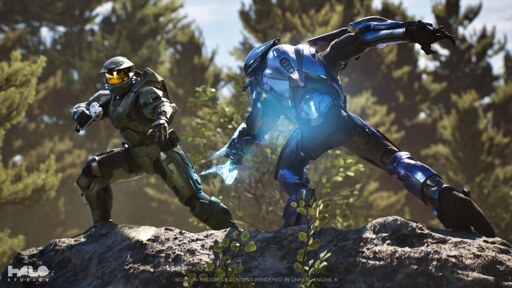
It’s not out for Halo 2 yet, but the Halo CE Ruby Rebalance is very good. A lot of thoughtful changes, some obvious (new weapons and enemies) some more invisible (tweaks to weapon stats and enemy spawn logic). It is respectful and high quality enough to the original that if you’d never played CE or hadn’t played in a long time, it would be hard to tell what the mod content was.
Keep an eye out for the Ruby Rebalance mod for the MCC.

MCC are remasters not remakes. This entire discussion got beat to death when the Halo CE remake was announced. The remakes will be completely new games, not visual facelifts on existing ones.
Caesar 3 has different “levels” where you have different cities and have to meet different demands from Rome with them. If you play this game I highly, highly, highly recommend using the Augustus mod from the get-go to have modern quality of life features. Also look up some tutorial videos as there are some counter intuitive mechanics.


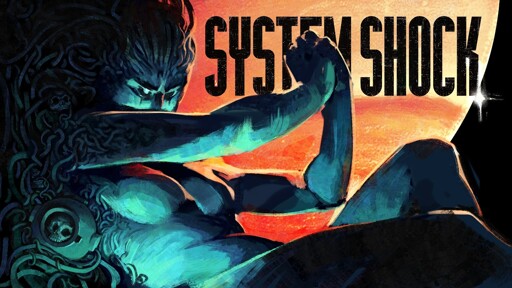

This is a standalone program.
Fortunately this person waited until it was playable to reveal it, so you can download it now before it gets zapped. Many projects show off footage early to build buzz and get killed before dropping a download.
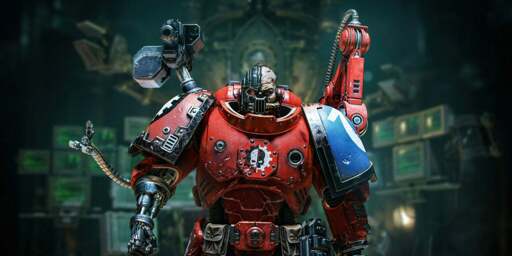
It’s not a “Christian game”, its a game where the setting is a violent, fractured place and Christianity has a large in-universe footprint, influencing factions.
Iron Tower Studio games makes quite good RPGs.
How would you, in general terms, construct an arrangement between a publisher that is funding development, and a developer? How would the agreement hold a developer to certain standards without any kind of time or budget limitations?
I’m not trying to be cute. If a publishing company gives money to a developer who is a separate entity to make a game, they’ve got to have some kind of contract. If there is no timeline or total budget written into the initial contract, how could a publisher pull out of that agreement?
If the answer is going to be “publishers can just pull out when they feel like it” then that’s neither adhering to the “let devs develop ‘until it is done’.” philosophy that is the entire point of this hypothetical restructure, and it for practical terms it does impose a deadline based on the publisher’s patience, except now that deadline is not expressly clear and simply defined.
If publishers can’t simply pull out on a whim, then without some kind of limiting factor that denotes a failure to perform where by a specific time a publisher can point to that failure, it can’t really be functional contract. Saying “the game must have x, y, z features” but never putting a time or budget limit in place means the developers can never have failed at implementing the features because they just haven’t gotten around to it yet.
In a publisher fronting money to developer situation, without a fixed time limit (or money limit, which functionally translates to a time limit) is the publisher just infinitely on the hook to pay for dev time “until it’s done”?
Let’s look at the initial comment in the chain:
all game developers need to put their foot down and say “it’s ready when it’s ready.”
No marketing deadlines, no “crunch time,” make the game until the game is made
It isn’t saying publishers should be more flexible about deadline delays, it is saying there simply shouldn’t be deadlines at all.
Shoveling infinite money at a developer who tells you it will be ready when it’s ready is the Chris Roberts model of game development. While it certainly produces interesting results, it is unrealistic and undesirable to expect it as the standard.
Games that are developing well but need a little more time to fix issues should be given flexibility by publishers, but at the end of the day there are stretch ideas and content that has to be cut. Doing that cutting and keeping the project focused is what a lead on the dev team should be doing throughout the entire development. If a game has a realistic deadline given the expected scope and the dev team comes back and says they actually need another year of production, then it is worth looking into if that extra time is going to make the game a year’s worth of investment better or not.
Publishers are considering return on investment. In a model where they are providing the game budget to the studio, every delay means more money out of their pocket. Case by case it might be worth it, but just allowing developers to infinitely say it’s “almost ready, just one more delay” isn’t reasonable.
I know from the hard core gamer audience that discusses this stuff online there is often this vibe that nothing should be cut from games. People look at various interesting cut content and lament it for not getting enough time, but there is always going to be cut content.
If there isn’t a lead on the development team putting their foot down to control the scope and focus the team, and a similar push for focus by a publisher you get a meandering unfocused project that goes over budget.
In the solo/small amateur team dev, self-publishing model that ROI pressure isn’t coming externally from a separate publisher. It is means solo devs are making their first games usually on a budget of nothing, as a side project to their day jobs. In some cases like with Concerned Ape it turns out great. In many cases development comes out tediously slowly, like with Death Trash. In innumerable cases the games just die.
In cases like Wasteland 2 it was a full professional team working full time using crowdfunding. An alternate model, but still limited by budget pressure. There was no publisher to pay back, but when the crowd funding money was gone, it was gone. That game did come out and it was enjoyable, but clearly it wasn’t “done when it’s done” levels of polish by the team since they used the profits from the game to release a “Director’s Cut” which was a whole polishing pass on the game they simply couldn’t afford the first time.
The above comments were talking about how this policy should apply to every game development project. Which is a nice thought, but not realistic for every situation.
That’s more or less how I feel about the first game. I really liked the setting and characters, but found the gameplay underwhelming. Combat was especially boring, which made me go towards stealth or dialog resolutions just to skip it, except the game had a long chunk where fighting the local wildlife was the only option.
Far Cry 2.
The game is fundamentally broken in a way that mods apparently can’t even fix. The enemy militia checkpoints instantly fully respawn as soon as you trip an invisible trigger. It makes combat with them pointless, which means getting stuck in a firefight with a checkpoint tedious.
The weapon degradation feature is way overtuned to cause some weapons to start visibly rusting from shot to shot.
These two aspects turn the game into a slog. Not even in a way that makes it immersive and survivalist, but immersion breakingly frustrating.
It’s a shame because the game was so ambitious. The game having a mechanic where a player at 0 health can get randomly saved if they befriended an NPC which will drag them to safety is really cool. The fire spreading everywhere was visually and tactically great. The malaria bouts were controversial, but I think they were a good way to increase the feeling of survival and desperation. There’s a lot good with a bleak, serious, and grounded Far Cry game but it just missed the mark in all the most impossible to ignore ways.
‘Far Cry 2 (2)’ would be amazing.