

cross-posted from: https://mander.xyz/post/46886810
The American president has invited Canada to become his country’s “51st state,” an idea that has infuriated most of Canada’s 40 million citizens.
…
Hence this suggestion: Why not expand the EU to include Canada? Is that so far-fetched an idea? In any case, Canadians have actually considered the question themselves. In February 2025, a survey conducted by Abacus Data on a sample of 1,500 people found that 44% of those polled supported the idea, compared to 34% who opposed it. Better the 28th EU country than the 51st US state!
One might object: Canada is not European, as required for EU membership by Article 49 of the EU Treaty. But what does “European” actually mean? The word cannot be understood in a strictly geographic sense, or Cyprus, closer to Asia, would not be part of the EU. So the term must be understood in a cultural sense.
…
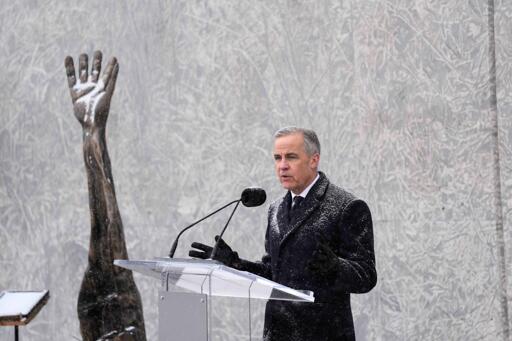
As [Canadian Prime Minister Mark] Carney said in Paris, in March: Thanks to its French and British roots, Canada is “the most European of non-European countries.” He speaks from experience, having served as governor of the Bank of England (a post that is assigned based on merit, not nationality). Culturally and ideologically, Canada is close to European democracies: It shares the same belief in the welfare state, the same commitment to multilateralism and the same rejection of the death penalty or uncontrolled firearms.
Moreover, Canada is a Commonwealth monarchy that shares a king with the United Kingdom.
…
Even short of a formal application, it would be wiser for Ottawa to strengthen its ties with European democracies rather than with the Chinese regime. The temptation is there: Just before heading to Davos, Carney signed an agreement with Beijing to lower tariffs on electric vehicles imported from China.
…
You’re not wrong. I don’t think a 99.whatever percent Muslim country would be a good culture fit. I would in fact say the same about majority-Christian or majority-Jewish countries if they’re taking their religion a bit too seriously. In fact I’m slightly worried about how religious some EU countries are, such as Poland.
The thing is that some of these Islamic countries still take the religion too seriously, much more so than most of us “westerners” (USA being a notable exception but hey I don’t think they’d be a good cultural fit for EU either).
There’s pretty liberal majority-Muslim countries out there and it’s quite possible that Morocco and Turkey will also get there.
Same for Estonia, we’re pretty accepting nowadays (with exceptions of course) and hell even 15-20 years ago it was very different. And yes, this was when we were already in the EU.
But LGBTQ rights were just one example. There’s also insane laws surrounding alcohol (though mostly don’t affect you if you’re not born in Morocco and don’t consume in public, the laws are particularly draconian for Moroccan Muslims and yes, they discriminate by religion).
Overall I just don’t think any society that still lets religion dictate how people have to live has a place in the EU. Which doesn’t mean I dislike Muslims in particular. I don’t want people of ANY religion telling me their god has any say in how other people have to live. Religion is fine, but secularism is needed.
And yes, there are the other issues you mentioned. In fact once some of those are taken care of, it’s quite likely that their society will also become more liberal naturally.