The first console I ever bought, it was hyped as a threat to the PlayStation, then mocked as a flop. But now, as it marks its 25th anniversary, it’s looked back on with misty-eyed reverence
The N64 did okay. Sticking with cartridges meant a game had to fit in a tiny fraction of the space available on the Saturn and Playstation’s CDs, meaning that cross-platform games were difficult if not impossible to port, or they left out full motion cut scenes or something. The N64 had first and second party titles from Nintendo and Rare, and inferior ports. That and being THE most Japanese company out there chasing off business partners left and right, TO INCLUDE SONY THEMSELVES AND THUS LEADING OT THE CREATION OF THE PLAYSTATION IN THE FIRST PLACE, meant the N64 finished the fifth generation console race in the middle of the pack.
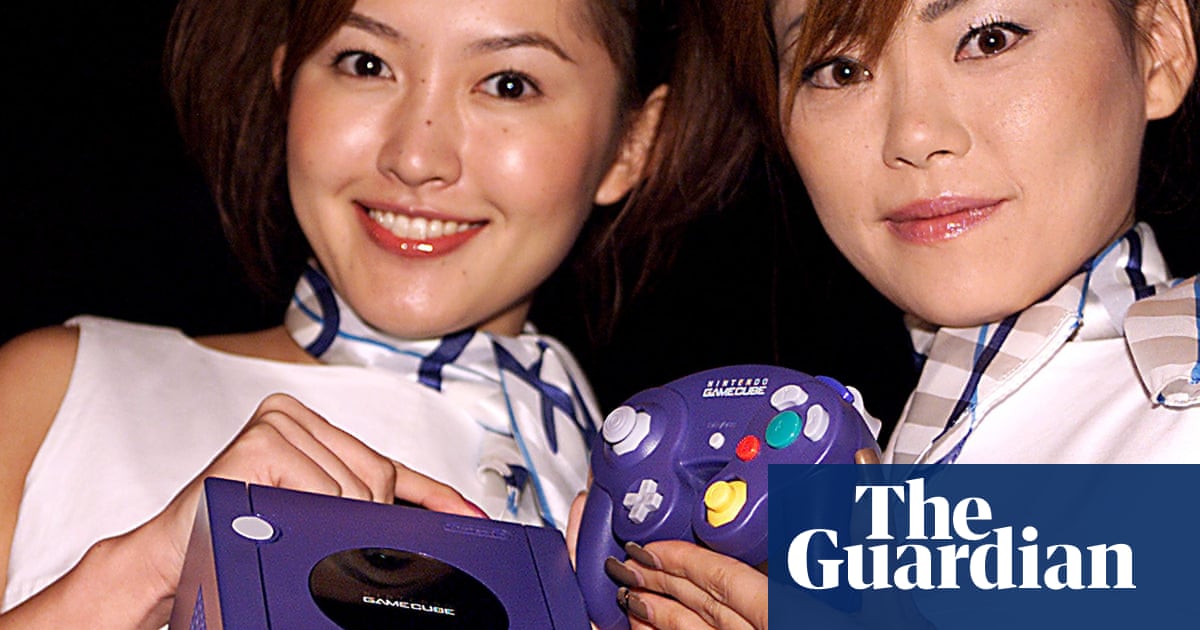
They continued to shoot themselves in the foot with the tiny discs for the Gamecube which meant a GC was STILL difficult to port games to because it STILL held less data than the competition, and couldn’t be used as a DVD player making it harder to sell to Dad than the Playstation 2. Due to the PS2’s low price tag ($100 less than a Dreamcast; the launch announcement at the very first E3 is a story unto itself), DVD video playback capability and backwards compatibility with PS1 software meant it outsold blowjobs for a couple years in a row.
Yeah Nintendo has a weird relationship with physical Media, but I will admit, when they announced Switch was using cartridges again, I was way too excited lol
The North American video game industry crash of 1983 was Nintendo’s chance to enter the North American market in earnest. A tidal wave of low quality, sometimes non-functional third party shovelware for consoles like the Atari 2600 had basically killed public faith in the industry, and folks were ready to write off video games as a passing fad. Inserting yourself into a dying industry like that takes some care, so Nintendo did some market research and found that Americans:
wanted to hear nothing about video games, but were excited for AV equipment and high tech toys. CD players and VCRs were increasingly popular, and electronic toys like the Speak 'N Spell and Teddy Ruxpin were rapidly gaining popularity.
Didn’t really play games as a family, games were kind of considered toys for the youth, with very few Americans over the age of 45 claiming to enjoy playing video games.
liked large things. American homes are fairly large by global standards, and especially in the still mostly analog world of the 1980s bigger usually meant better. A VHS cassette held more tape, and thus played longer, than the smaller Betamax cassette.
Expressed frustration in finding good quality games through all the nonsense. Some games wouldn’t even run, and in the 1980s, how could you tell?
Responding to this input, they changed the name of the console. Gone was “Family Computer” or “Famicom”, in with Nintendo Entertainment System. The form factor was drastically changed, removing the conventional top loading edge connector slot in favor of that front loading then push down mechanism designed to emulate a VHS deck. The cartridge shell was made at least 4 times larger than a Famicom cartridge, though the circuit board inside was often identical in size and shape to a Famicom cart; most NES cartridges were mostly empty in size, but that size was required by the loading mechanism. Mostly as a marketing stunt, they offered a bundle early on with a robot toy called ROB that could interact with a few specially designed games. It was a gimmick, but a successful one.
And finally, DRM. To address the shovelware problem, Hiroshi Yamauchi, President of Nintendo, would personally approve every game published for the system. The console had a hardware lockout chip that would look for a corresponding key chip in the console; if none was found, it would reset the console, meaning unapproved software couldn’t run. That, along with enforcing IP laws on the cartridge’s physical design, was designed to make Nintendo the only publisher for the system; any third party developers would have to contract with Nintendo to manufacture the cartridges. Nintendo communicated this to customers via the Nintendo Seal Of Quality, a (trademarked) badge on the packaging to reassure customers that the game had gone through a vetting process. They stopped short of guaranteeing the game was fun to play, but that it functioned correctly, wouldn’t crash or damage the console, and contained relatively wholesome content. Custer’s Revenge would never wear a Nintendo Seal Of Quality.


The N64 did okay. Sticking with cartridges meant a game had to fit in a tiny fraction of the space available on the Saturn and Playstation’s CDs, meaning that cross-platform games were difficult if not impossible to port, or they left out full motion cut scenes or something. The N64 had first and second party titles from Nintendo and Rare, and inferior ports. That and being THE most Japanese company out there chasing off business partners left and right, TO INCLUDE SONY THEMSELVES AND THUS LEADING OT THE CREATION OF THE PLAYSTATION IN THE FIRST PLACE, meant the N64 finished the fifth generation console race in the middle of the pack.
They continued to shoot themselves in the foot with the tiny discs for the Gamecube which meant a GC was STILL difficult to port games to because it STILL held less data than the competition, and couldn’t be used as a DVD player making it harder to sell to Dad than the Playstation 2. Due to the PS2’s low price tag ($100 less than a Dreamcast; the launch announcement at the very first E3 is a story unto itself), DVD video playback capability and backwards compatibility with PS1 software meant it outsold blowjobs for a couple years in a row.
Yeah Nintendo has a weird relationship with physical Media, but I will admit, when they announced Switch was using cartridges again, I was way too excited lol
That weird relationship with physical media started off as a key element of their business model, back in the NES era. They just…never let go.
I should find something online and look this up. Sounds like an interesting history lesson
Here’s the popular story as I’ve heard it:
The North American video game industry crash of 1983 was Nintendo’s chance to enter the North American market in earnest. A tidal wave of low quality, sometimes non-functional third party shovelware for consoles like the Atari 2600 had basically killed public faith in the industry, and folks were ready to write off video games as a passing fad. Inserting yourself into a dying industry like that takes some care, so Nintendo did some market research and found that Americans:
wanted to hear nothing about video games, but were excited for AV equipment and high tech toys. CD players and VCRs were increasingly popular, and electronic toys like the Speak 'N Spell and Teddy Ruxpin were rapidly gaining popularity.
Didn’t really play games as a family, games were kind of considered toys for the youth, with very few Americans over the age of 45 claiming to enjoy playing video games.
liked large things. American homes are fairly large by global standards, and especially in the still mostly analog world of the 1980s bigger usually meant better. A VHS cassette held more tape, and thus played longer, than the smaller Betamax cassette.
Expressed frustration in finding good quality games through all the nonsense. Some games wouldn’t even run, and in the 1980s, how could you tell?
Responding to this input, they changed the name of the console. Gone was “Family Computer” or “Famicom”, in with Nintendo Entertainment System. The form factor was drastically changed, removing the conventional top loading edge connector slot in favor of that front loading then push down mechanism designed to emulate a VHS deck. The cartridge shell was made at least 4 times larger than a Famicom cartridge, though the circuit board inside was often identical in size and shape to a Famicom cart; most NES cartridges were mostly empty in size, but that size was required by the loading mechanism. Mostly as a marketing stunt, they offered a bundle early on with a robot toy called ROB that could interact with a few specially designed games. It was a gimmick, but a successful one.
And finally, DRM. To address the shovelware problem, Hiroshi Yamauchi, President of Nintendo, would personally approve every game published for the system. The console had a hardware lockout chip that would look for a corresponding key chip in the console; if none was found, it would reset the console, meaning unapproved software couldn’t run. That, along with enforcing IP laws on the cartridge’s physical design, was designed to make Nintendo the only publisher for the system; any third party developers would have to contract with Nintendo to manufacture the cartridges. Nintendo communicated this to customers via the Nintendo Seal Of Quality, a (trademarked) badge on the packaging to reassure customers that the game had gone through a vetting process. They stopped short of guaranteeing the game was fun to play, but that it functioned correctly, wouldn’t crash or damage the console, and contained relatively wholesome content. Custer’s Revenge would never wear a Nintendo Seal Of Quality.