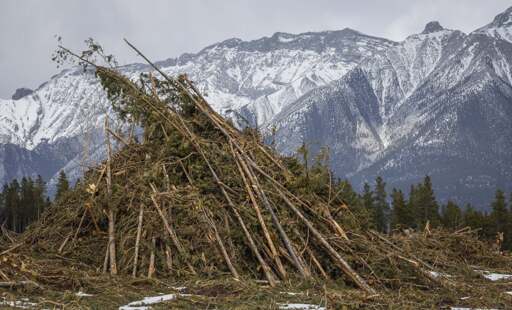
Wildfire expert Mike Flannigan says this year will be his “litmus test” for whether Canada’s wildfire seasons, already in uncharted territory and fuelled by human-caused climate change, have entered a “new reality.”
In Northern Ontario, we had a lot of snow (still two feet on the ground) so I imagine it will be a late start here.
We had a cold winter, good snow pack and a wet spring. Should be a low fire season.
We had a cold winter, good snow pack and a wet spring. Should be a low fire season.
At least for the first couple of months.
Hopefully there will be some long, slow soaking type rain events (as opposed to thunderstorms) every few weeks through the summer to keep the forests damp enough to reduce the risk of multiple fires.
Canada’s managed forests have in recent years started to release more carbon they absorb, reinforcing a climate feedback loop. In the most striking example, the 2023 wildfires released more planet-warming emissions than almost any country on Earth, save for China, India and the United States, a NASA study found.
Extreme wildfire behaviour is also becoming more common, Flannigan said. Wildfires such as the Jasper 2024 complex can burn so intensely they generate their own thunderstorms that spawn lighting strikes and start new spot fires. The 2023 season saw the most fire-generated thunderstorms recorded in a season, with more than 140 in Canada alone, Flannigan said. The previous global record was 100, set two years earlier.