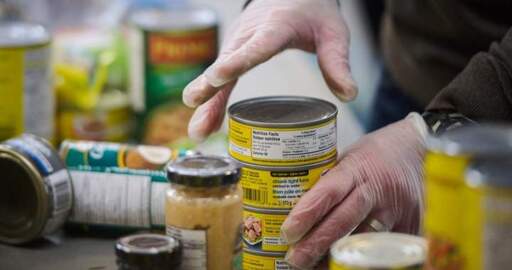
One-in-three Canadians is tapping into savings or borrowing to buy food. Those are the latest findings in the Canadian Food Sentiment Index report by Dalhousie University’s Agri-Food Analytics Lab. Of those surveyed, food affordability remains the top concern, but transportation is adding to household financial strain. However, when it comes to eating out at restaurants or take-out, the numbers tell a different story with Millennials leading the way with spending the most money.
What’s it going to take for Canadians to go out and protest over this? This and the price of having a shelter. Two basic fucking needs.
Can YOU personally, afford to take time off, and potentially lose your job, to protest? In Ontario I get three ‘job protected’ days off in the year, if I get arrested and miss my Friday-Sunday shift I am fucked. No one is going to risk their home and job to yell, ineffectually, at a bunch of millionaires and politicians.
And even if they did, what would that accomplish? Whether you agree with the convoy or not, they protested. And not only did the government (rightly) ignore them, their accounts were frozen. Even if you could afford to take time off to protest, and even if losing your job was not a risk, that could also happen to you. Especially if the government disagrees with you. Precedent is a nasty thing when you’re on the wrong side of it.
Civilizations are always a few days away from tearing themselves apart, and the Oligarchs are seeing how far they can push it.
So glad our elected officials are taking this seriously, and are taking steps to control the inflation were all suffering through! /s
If only we protested like the french. Governments are generally asleep at the wheel.
First time?
The only expense that ever goes down is someone else’s, and is your income.
Sounds like it’s time (if you can afford to) to donate to a food bank. I’ve read that donating to one like Canada Food Bank (or your provincial one) has a greater impact than your local food bank.
There are many ways this could be solved, but the governments seem to always refuse to do so. Like UBI, or forcing groceries to not pass on the increased costs to consumers.
Thanks for the reminder. I’m far from rich but I’m more fortunate than some and my company has donation matching – so I’m going to do it first thing tomorrow.
On this topic, donating food is of course awesome, but if you can, donate money. The food bank can stretch that $5 muuuuuch farther than you can in terms of food.
You know the saying:
‘Donate to a food bank and feed a person for a day but teach them to shoplift and you feed them for the rest of their lives.’
I honestly wouldn’t be able to tell you what a shoplifter looks like.
Potential mechanisms include capping profits of select food supply chain industries to a specific amount. E.g. a progressive tax that reaches 100% above a certain amount. This eliminates the benefits of gouging.
Another potential mechanism is heavy regulation or even nationalization of critical food industries. For example, otherwise healthy food that doesn’t meet commercial standards for size, colour etc, can be sold to the government for a minimum viable price, but sent to food banks and soup kictchens. As a consumer paying top dollar you’ll want the best looking potato carrot or apple, but for a soup kicthen’s free meal, any potato will do. Consider it a buyer of last resort. It doesn’t mess with the markets, but it underpins total availability. Yet another is to let food bank volunteers scrape nearly but not yet spoiled food as a means of stocking up. Instead of buying food, food bank dollars can focus on logistics of eliminating our tremendous spoiled food that didn’t sell. It currently just goes to waste. The stores benefit because volunteers help trim shelves of food that is almost past due, and food banks and soup kitchens get food for free or at least the cost of getting it and preparing it.
There is also progress being made with apps like TooGoodToGo where food businesses can offer deep discounts on random stuff before things go bad. The programs can be expanded and optimized for greater food equity.
There are lots of opportunities. This is a failure of markets, because there is still, in absolute terms enough food for everyone. Markets only chase profit, so ideally this needs to be a public solution.
No one in this country needs to go hungry.
Also, donate to things like the Salvation Army emergency food fund. Why? Because if you lose your job tomorrow and have debt but minimal savings, guess what? You can’t just walk into a food bank and walk out with dinner. You walk in, fill out the paperwork, and then wait until it is processed and the next distribution day arrives.
So if you need food TODAY, call 211. They’ll find your local emergency food service, who likely is funded almost completely by donations, unlike food banks that have some government support (through the CFB).
Depends how much you’re donating. Your $20 will go farther municipally than provincially.
Re: price controls, that’s been tried before (not in Canada). It didn’t end well. What makes you think they wouldn’t end the same? Specifically, how would you prevent the price-restricted companies from deciding to just… not sell the things that are least profitable under that model?
enormous fines?
Yeah, the loophole of “well, now I coincidentally don’t wanna sell that anymore!”/“I just can’t find a supplier!” Only work if you give them the benefit of the doubt. If they’re getting fined $10k/day/location for as long as they don’t sell the things people need to buy, I bet they can find a supplier. If not, maybe it’s time to deprivatize some grocery store businesses.
What they’ll do is find the one thing that isn’t price controlled and wham, up it goes. Loblaws doesn’t just sell food, after all. Neither does Walmart. Neither does Metro. And if you decide that if it’s sold in a grocery store it’s now under a price control, well, maybe some locations no longer have grocery stores. On the bright side that opens the door for Avi Lewis’s public grocery store idea. On the not-so-bright side, if Avi’s public grocery store doesn’t sell what you’re looking for because the government doesn’t think you should have it, you’re pooched.
Property contro issue is also a factor that needs to be tackled.
Why not both? Though if I’m honest no government be it right, left or centre will do much of anything about either, and their solutions will almost certainly create more problems.
We also need to nip surveillance pricing in the butt asap